process
No documented process notes are available in this reference.
An unfinished page is still evidence
The short message establishes that a process page had been planned but not completed. It offers no description of the artist's forming, decorating, glazing, or firing methods. Adding a detailed tutorial under her name would be speculation.
Kristin Pavelka worked with earthenware and “candy-coating” glazes to make highly decorated functional pottery. Studio News referred generally to experiments with forms, techniques, surface treatments, and firing temperatures. Those references show that process mattered to the portfolio, but none supplies a complete sequence or recipe.
What the illustration means
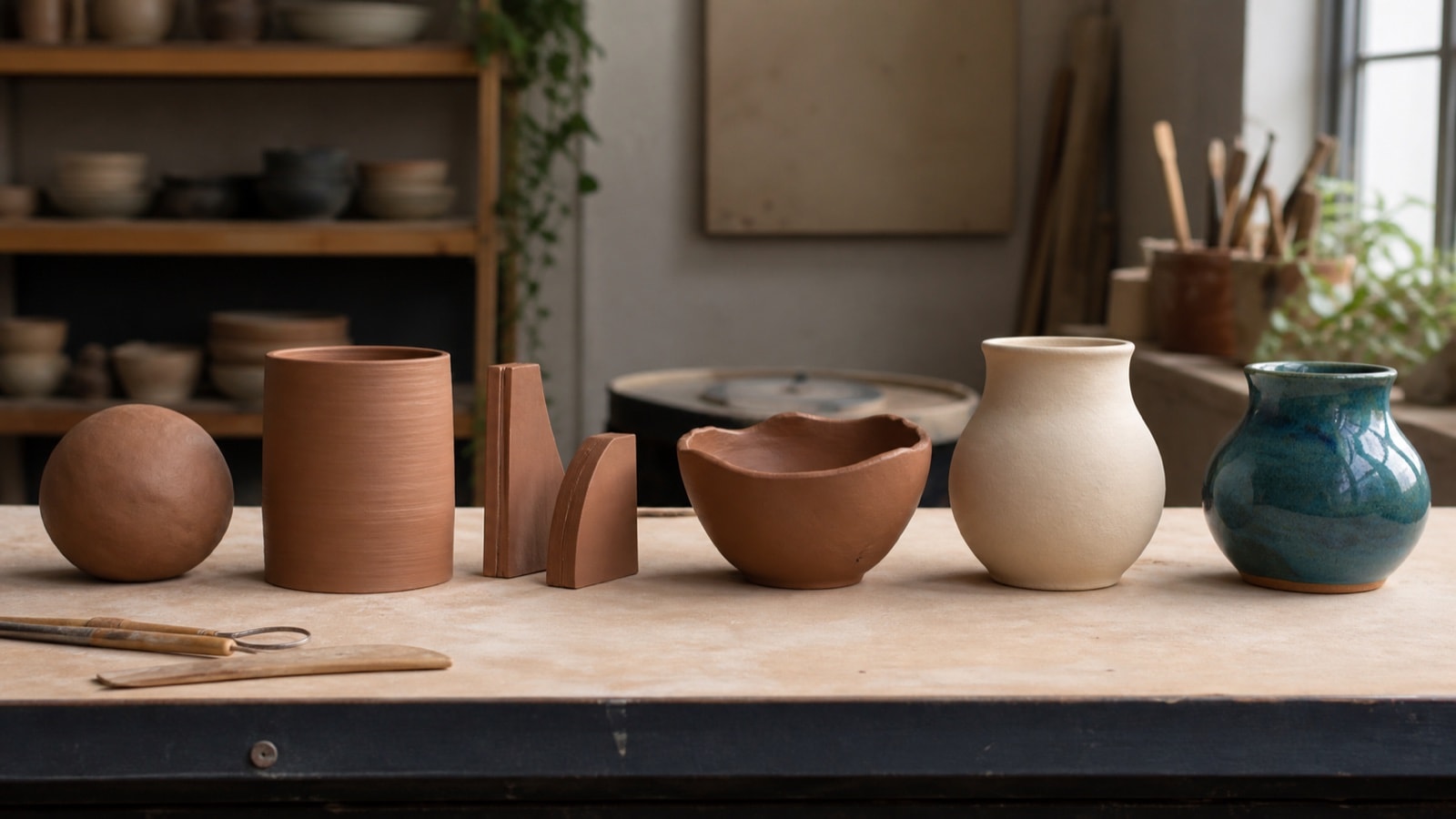
The image shows generic clay forms at broad stages for editorial atmosphere. It is not a diagram of Kristin Pavelka's studio practice. It does not identify materials, tools, temperatures, chemicals, ventilation, or food-safety outcomes. Readers should not use it as instruction.
A ceramics glossary can help define general ceramics vocabulary without attributing a method to the artist. That external reference is educational and has no affiliation with this site.
An unfinished page
A detailed process essay would create claims about techniques that are not documented here.
For dated context, continue to the biography, resume and Studio News material.
For related material, visit the artist statement and biography, the historical resume, or the dated Studio News. Those pages discuss pottery, surfaces, exhibitions, and studio activity without turning this unfinished notice into a technical guide.