Home In the studio
A cup in the hand
Kristin Pavelka liked a lip that swelled, then tapered to a fine drinking edge. A cup could look sturdy on the table and still feel light against the mouth.
Where fingers meet clay
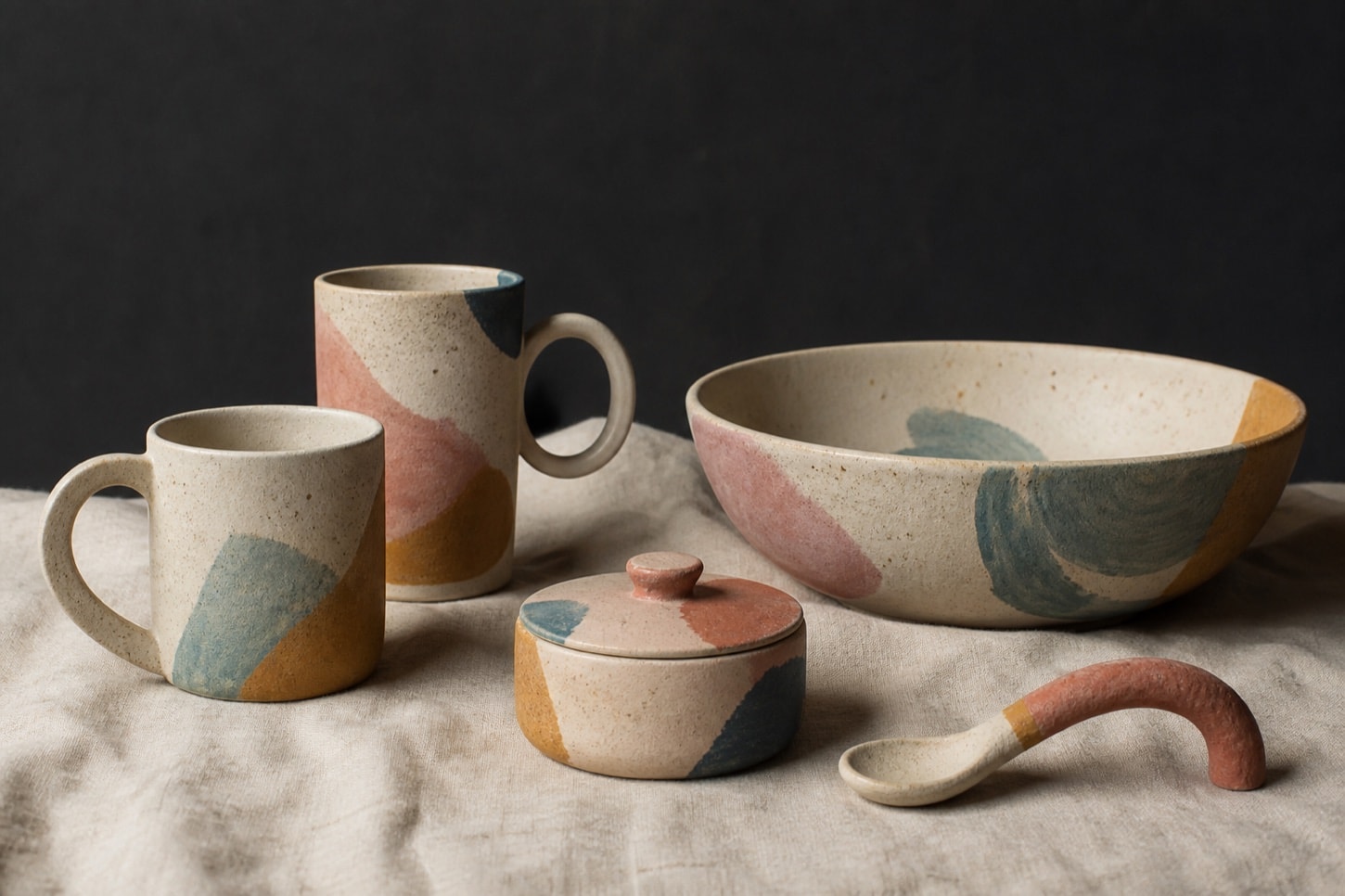
Look at the pink cup. A fingertip can slip through its loop and the thumb can settle above it. Lift the tumbler beside it and the fingers have to reach around the body instead. Pavelka wanted the curve of a handle to please the eye and feel comfortable from the first lift.
A pinch and a wrap
- On a lid knob
- A pinch brings the thumb toward the fingertips. A small knob offers just a patch of clay to grasp.
- Around a handle
- Curl the fingers toward the palm and more of the hand meets the object. The size of the loop and the thickness of the clay change how much room the fingers have.
The Canadian Centre for Occupational Health and Safety describes these two grips in its discussion of hand tools. Try looking at a serving spoon and a butter-box lid with the same distinction in mind.
Where the weight sits
Trimming takes clay off the underside of a pot. Pavelka left enough at the foot to give the base some weight even when the walls were thin. She compared the balance of a pot resting in her hands to the heft of a young puppy.
Handling a collection piece
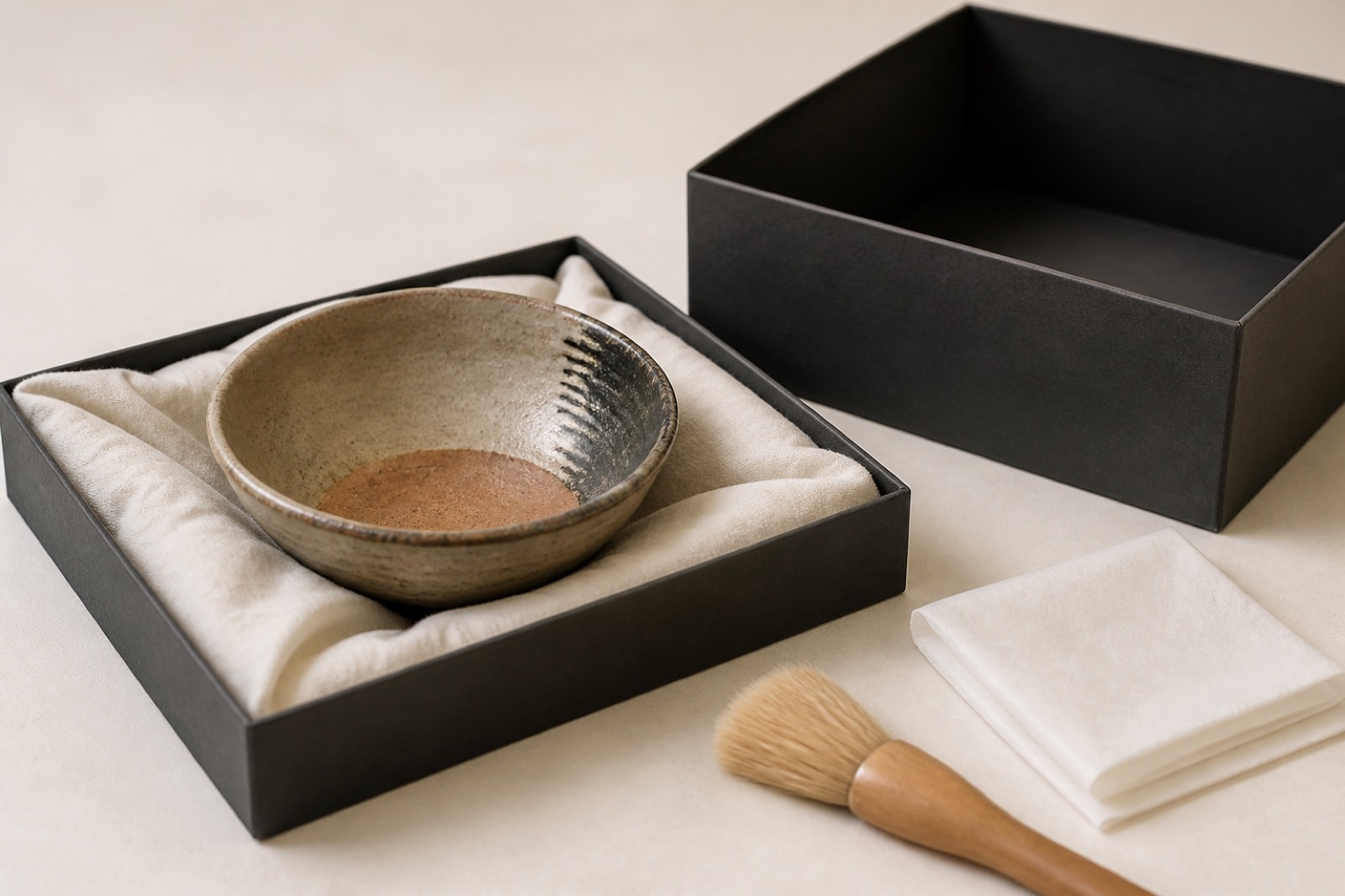
An old repair or a weak join can be hard to see. Moving a collection bowl this way spares the handles and rim the weight of the pot. A loose lid can travel separately. Read the Canadian Conservation Institute’s advice on handling ceramics.